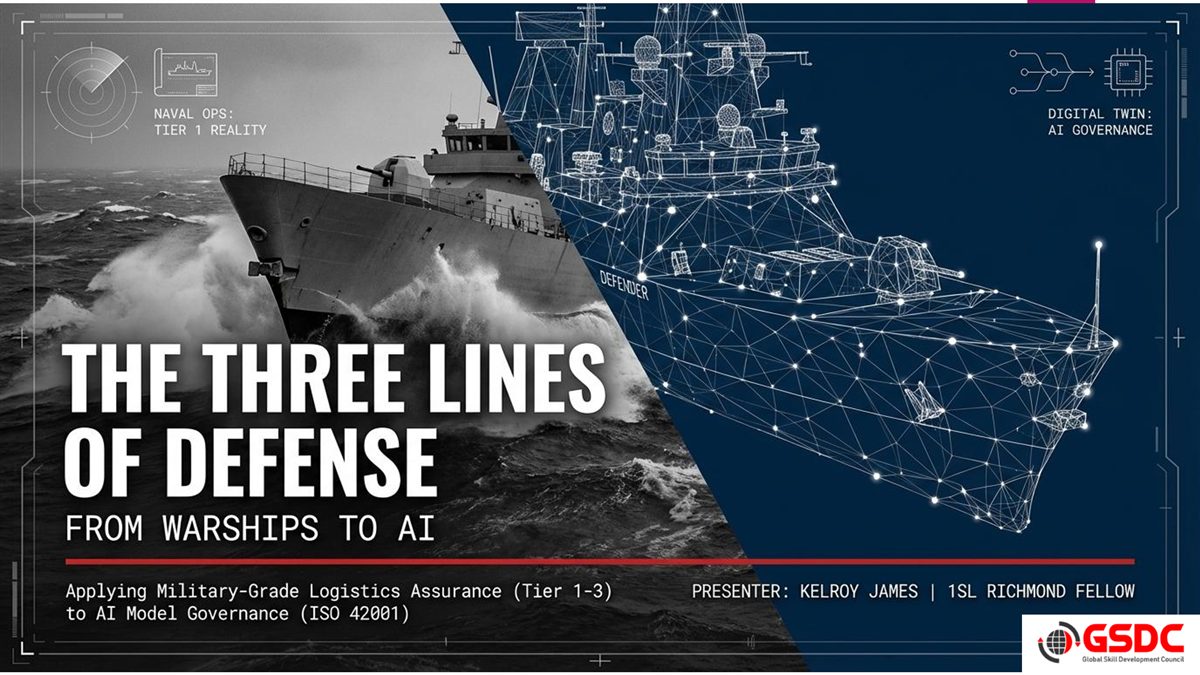
The three lines of defence: from warships to AI
Applying military-grade logistics assurance (Tier 1–3) to AI model governance (ISO/IEC 42001). The Royal Navy's four-tier assurance model and the ISO standard governing AI management systems turn out to be solving the same problem, in different vocabularies.
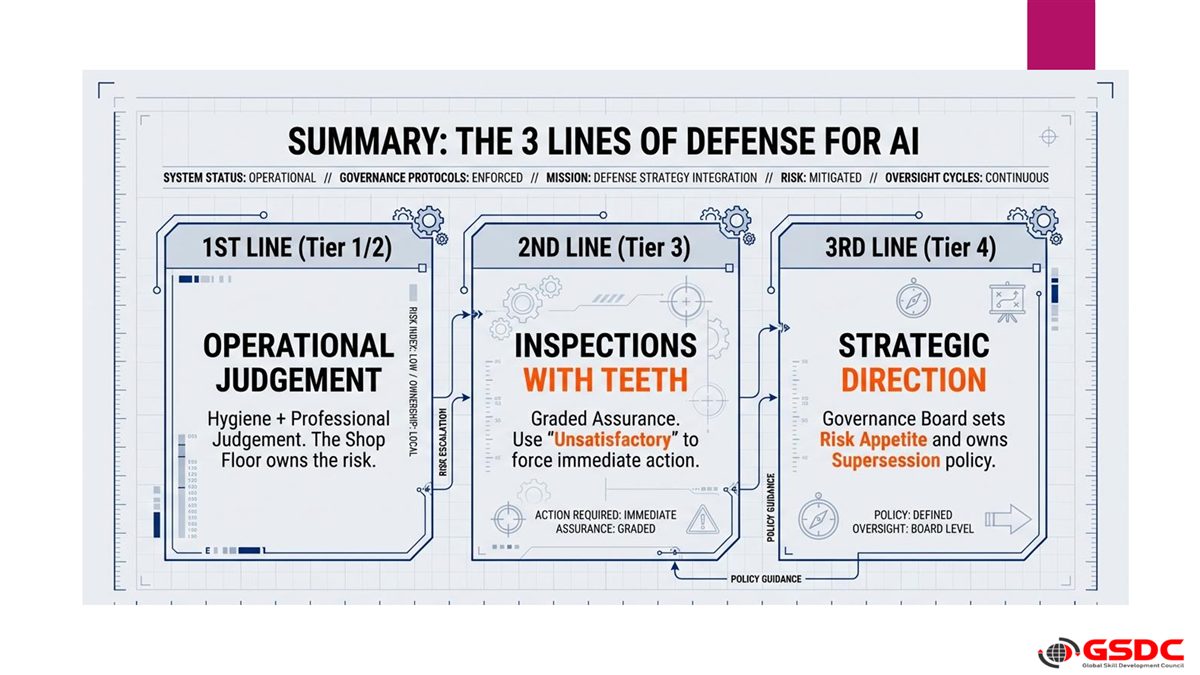
While working through an ISO/IEC 27001 Lead Auditor course, I compared it with a control I had been running for years under a different name, and the two matched. The Royal Navy's four-tier assurance model, made up of sub-departmental checks, departmental review, independent inspection, and strategic governance, is the same architecture ISO management-system standards use everywhere, described in a vocabulary built for warships instead of boardrooms.
Same Control, Two Vocabularies makes that comparison at the level of individual tasks. This presentation, given to the Global Skill Development Council, takes the same argument up a level, to the assurance architecture itself, applied to a live governance problem: AI model risk under ISO/IEC 42001.
If a four-tier model has kept warships and their supply chains audit-ready for decades, the same structure is a reasonable starting point for governing something that changes as fast as an AI model does.
The foundation
Royal Navy logistics assurance policyThe comparison
Logistics assurance policy vs. ISO/IEC 42001The map
Naval tiers → corporate defenceThe tiers in practice
Operational control → independent assuranceTwo lessons that transfer directly
From the deckWhy it matters
Assurance as capability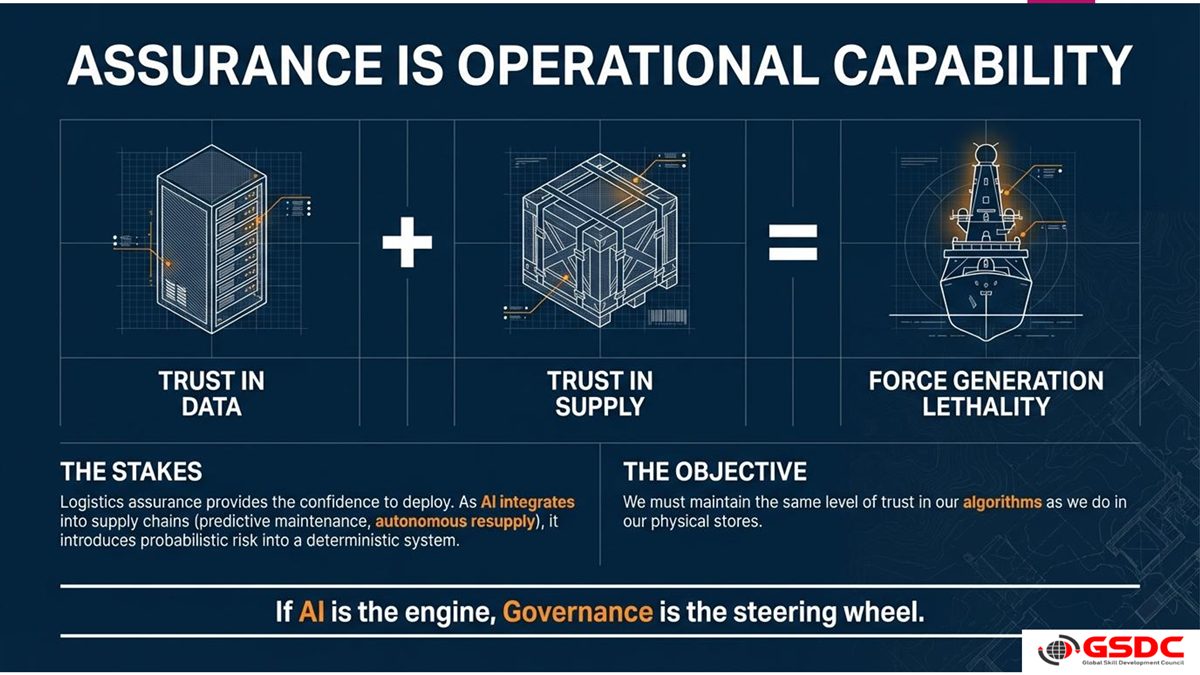
Scope of this presentation
It is a structural analogy. Nothing here asserts that following this framework satisfies ISO/IEC 42001 certification requirements, and no organisation should treat a slide here as evidence a requirement has been met. The naval policy references are described in general terms; nothing internal to the Royal Navy or the Ministry of Defence is reproduced.